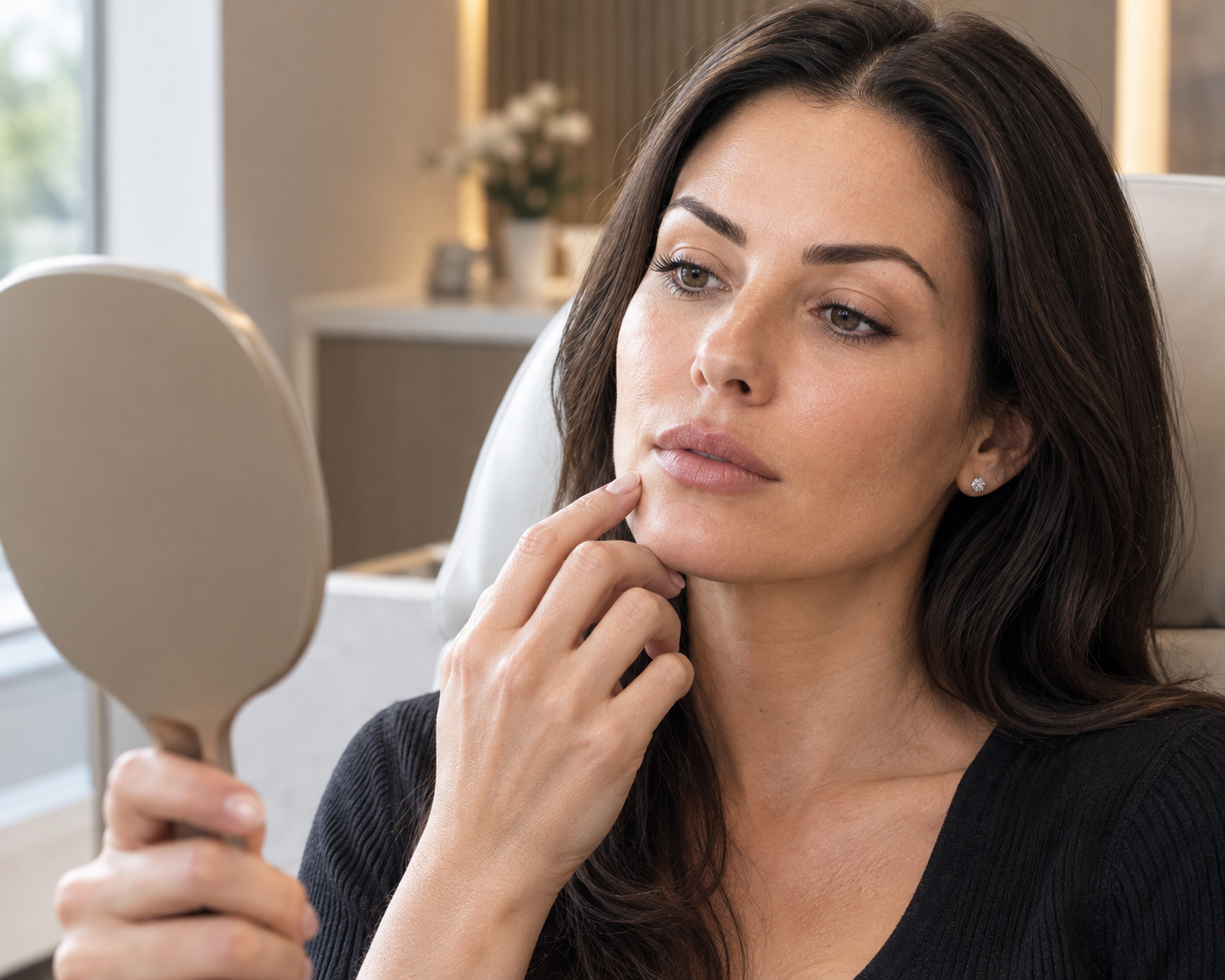

Lip Filler in London: Natural-Looking Lip Enhancement at Dr Kay Clinic
A doctor-led approach to lip shape, definition and proportion in Chiswick, West London.
Lip filler should be about more than making lips bigger. For some people, the goal is a little more definition around the Cupid’s bow; for others, it is restoring volume that has gradually reduced with age or improving a noticeable imbalance between the upper and lower lip.
I am Dr Arash Khademi, known as Dr Kay, a GMC-registered doctor at Dr Kay Clinic in Chiswick. When I assess lips, I look at how they move, how they sit within the face, and whether an injectable treatment is appropriate at all. Sometimes the most balanced result comes from using less filler. Sometimes my recommendation is not to inject.
What is lip filler?
Lip filler is a non-surgical injectable procedure that can change lip volume, outline and contour. Hyaluronic acid (HA) gels are commonly used because they can provide adaptable, temporary enhancement. HA is also a substance naturally found in the body, but an injectable HA filler is a manufactured medical product with its own properties and risks.
The choice of product, depth of placement and amount used should depend on your anatomy and clinical assessment, rather than a standard “one-size-fits-all” lip shape.
What can lip filler improve?
• Volume: add modest fullness where the lips are naturally thin or have lost volume over time.
• Lip border and Cupid’s bow: refine definition without necessarily increasing overall size.
• Upper-to-lower lip balance: adjust proportions while respecting natural facial variation.
• Mild asymmetry: improve selected differences, while recognising that perfect symmetry is neither realistic nor necessary.
• Fine surface lines: in selected cases, filler may soften some lines related to reduced volume; it does not treat every cause of lip texture changes.
Not every concern can be corrected with filler. Lip shape also depends on dental support, jaw relationships, muscle activity and underlying facial anatomy. Adding volume cannot reliably correct every structural difference.
My approach: facial harmony rather than a standard lip template
A photograph showing dramatically enlarged lips does not tell us whether the same treatment is appropriate for another person. I assess lip length and projection, the philtrum, the Cupid’s bow, the relationship between the upper and lower lips, and how the mouth looks both at rest and when speaking or smiling.
At Dr Kay Clinic, I plan treatment conservatively and explain the possible trade-offs. Greater projection, for example, may not improve someone who mainly wants a more defined lip border. The intention is a proportionate result, but no injection can guarantee a particular appearance.
Ultrasound may be useful when previous filler or an anatomical concern makes additional assessment appropriate. It is not required for every lip injection, and neither ultrasound nor any injection technique can remove the risk of complications.
What happens during a lip filler appointment?
1. Consultation and suitability assessment. We discuss your aims, previous filler, medical history, medicines, allergies, any tendency to develop cold sores and relevant dental or facial concerns. I examine your lips and surrounding structures and explain whether treatment is likely to help.
2. Treatment planning and informed consent. If filler is appropriate, we discuss the proposed product, amount, alternatives, expected limitations, potential complications and cost. You should feel free to take more time to decide.
3. Injection and immediate assessment. The selected filler is administered using an approach tailored to the anatomy and treatment plan. A topical anaesthetic or a product containing local anaesthetic may be used, depending on suitability. There may still be discomfort.
4. Aftercare and follow-up. You receive individual aftercare instructions and advice about normal recovery, warning signs and how to contact the clinic. The final result is best judged after early swelling has settled.
How much lip filler do I need?
There is no universally correct volume. A full millilitre is not automatically necessary, and more filler does not necessarily mean a better result. The required amount depends on the starting anatomy, desired degree of change, product characteristics and whether previous filler is present.
If an adjustment is appropriate later, that decision should be made after reassessment, not on the assumption that an early swollen appearance shows the finished result.
Recovery: swelling, bruising and aftercare
Swelling, tenderness, redness and bruising are common after lip filler. The lips can look uneven or larger than intended initially. Swelling often improves substantially over the first few days, but it may take around one to two weeks, sometimes longer, for the area to settle sufficiently for a reliable assessment.
Follow your clinician’s specific aftercare instructions. In general, avoid unnecessary pressure, squeezing or massage of the lips unless you are specifically advised to do so. Contact the clinic if a new lump, increasing discomfort or an unexpected change concerns you. Do not try to dissolve, manipulate or reinject filler yourself.
Lip filler risks: what should you know?
Although many after-effects are mild and short-lived, dermal filler injections carry recognised risks. These include bruising, swelling, infection, allergic or inflammatory reactions, unevenness, palpable nodules, persistent swelling, product migration and an unwanted aesthetic result. Cold sores may be reactivated in susceptible patients.
A particularly important but uncommon complication is vascular occlusion: filler enters or compresses a blood vessel and reduces the blood supply to tissue. This can cause skin or lip damage and, in the worst cases, tissue necrosis. Loss of vision or a stroke-like event after facial filler is exceptionally rare but constitutes a medical emergency.
Seek help immediately: Severe or increasing pain, unusual whitening or patchy/dusky discoloration, cool skin, or rapidly worsening changes after injection require immediate clinical assessment; pain is not always present. If you develop any change in vision, sudden weakness, facial drooping, difficulty speaking or other neurological symptoms, call 999 immediately. Do not wait for a routine review.
Selecting a clinically trained practitioner who can recognise and manage complications is important, but it cannot make risk zero.
Who should postpone or avoid lip filler?
Lip enhancement at Dr Kay Clinic is available only to adults aged 18 and over. Elective treatment is postponed during pregnancy or breastfeeding because evidence of safety is insufficient. An active cold sore, infection or inflammation around the proposed injection area is another reason to delay treatment.
A history of frequent cold sores, previous filler complications, allergies, certain medical conditions or relevant medicines may alter the plan. Always disclose these details; do not stop prescribed medicines without discussing them with the clinician who manages your care.
How long does lip filler last?
HA filler results are temporary, but the duration of a visible improvement varies according to the product, amount injected, movement in the treatment area and individual factors. Some patients notice meaningful changes for several months, while filler material can persist longer than the visible effect. It is not possible to guarantee a fixed lifespan or a precise date when all injected material will disappear.
Repeat treatment is optional. Existing filler should be assessed before recommending more.
Can previous lip filler be corrected?
If you are concerned about lumps, asymmetry, migration or an overfilled appearance from a previous procedure, the first step is assessment, not automatically adding more filler. Depending on the finding, the appropriate plan may be observation, targeted treatment or consideration of dissolving HA filler. Dissolving is a medical intervention with its own risks and does not guarantee an instant or perfect correction.
Ultrasound can be considered when it may clarify the location or characteristics of previously injected material. It is used selectively rather than as a substitute for examination and clinical judgement.
How much does lip filler cost at Dr Kay Clinic?
The clinic’s currently published price for lip filler is £300. This is not a recommendation for every patient: suitability, the treatment plan and the proposed cost are confirmed at assessment. If further treatment is considered, any additional charges should be explained before proceeding.
You can check the latest price and booking terms on our lip filler service page or contact the clinic directly.
Consider lip filler in Chiswick? Start with an assessment
If you are looking into lip filler in London, I would encourage you to begin with a proper assessment rather than choosing an amount of filler from an online menu. At Dr Kay Clinic in Chiswick, I will discuss what you would like to change, what is achievable and whether any intervention is justified.
Dr Kay Clinic, 36 Devonshire Road, Chiswick, London W4 2HD. Telephone: 0203 576 2577. WhatsApp: 07799 816999. Appointments are by arrangement; current details and opening hours are available on the clinic website.
Lip filler in London — Dr Kay Clinic | Consultation and assessment
Dr Arash Khademi (Dr Kay) | GMC-registered doctor | Dr Kay Clinic, Chiswick, West London
Medical information notice: This page offers general information and is not individual medical advice. Cosmetic filler treatment is optional and carries risks. Clinical suitability and current fees must be confirmed before treatment.
Medical and regulatory sources
• Murray G, Convery C, Walker L, Davies E. Guideline for the Management of Hyaluronic Acid Filler-induced Vascular Occlusion. J Clin Aesthet Dermatol. 2021;14(5):E61–E69. Source
• Díaz-Aguayo I, et al. Aesthetic management of lips and perioral region with hyaluronic-acid based fillers: a document of recommendations. J Cosmet Dermatol. 2024;23(9):2843–2856. Source
• UK multidisciplinary consensus. Management of tissue filler–induced vision loss in the United Kingdom. Aesthetic Surgery Journal. 2026;46(5):563–568. Source
• UK Government. Botulinum toxin and cosmetic fillers for under 18s — guidance for businesses. Source