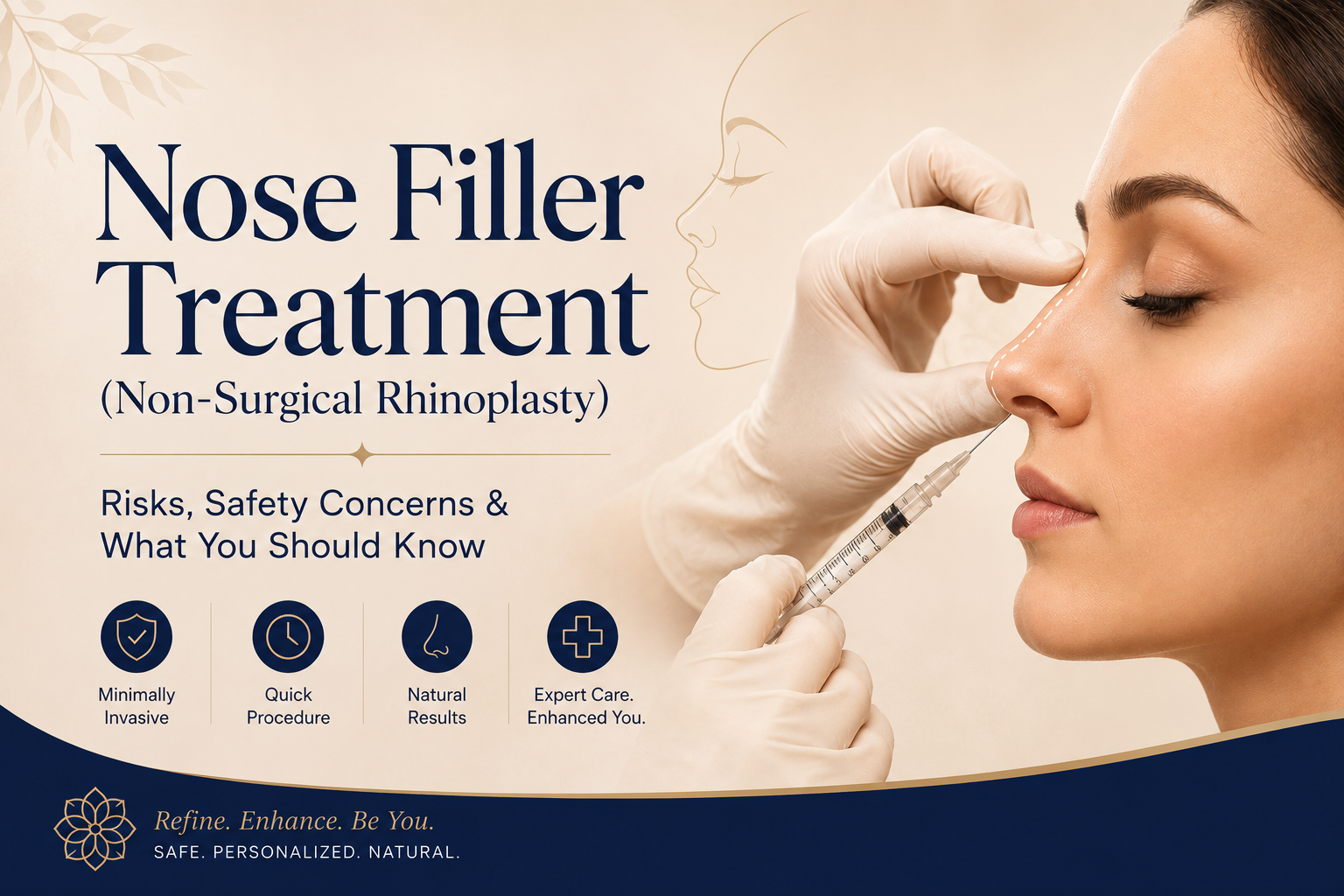
Nose filler treatment, also known as non-surgical rhinoplasty, has become increasingly popular across the UK as a quick alternative to cosmetic nose surgery. While the idea of reshaping the nose without going under the knife may seem appealing, it is essential for patients to understand that this procedure carries significant medical risks. The nose is one of the most anatomically complex and high-risk areas for dermal filler injections, and complications can be severe when performed by inexperienced or non-medic practitioners.
What Does Non-Surgical Rhinoplasty Involve?
Non-surgical rhinoplasty uses hyaluronic acid filler to temporarily reshape specific areas of the nose. The goal is typically to improve symmetry, lift the nasal tip, camouflage a dorsal hump, or create a straighter appearance. Results are immediate and can last between 9 to 18 months, depending on metabolism and filler type.
However, unlike lip fillers or cheek augmentation, the nose contains extremely delicate blood vessels that supply critical surrounding tissues, including the eyes. This is why the procedure, although marketed as “simple” or “lunchtime,” should never be taken lightly.
Why Nose Filler Is Considered High Risk
Many people search for a non-surgical nose job believing it to be a quick, simple alternative to traditional rhinoplasty, but it’s important to understand that this procedure carries significant risks. Although it can temporarily improve the appearance of the nose using dermal fillers, the nasal area contains complex blood vessels that make it far more dangerous than most cosmetic injections. Anyone considering a non-surgical nose job should be fully aware of the potential complications before deciding whether it is worth pursuing.
Nose filler injections are significantly riskier than most aesthetic treatments due to the anatomy of the area. Below are the primary reasons medical professionals urge patients to be cautious:
- High Vascular Complexity
The nose has one of the densest networks of arteries in the face.
A misplaced injection can block a blood vessel, reducing or cutting off circulation to surrounding tissue.
Even minimal pressure from filler can compromise blood flow.
- Risk of Skin Necrosis
Vascular occlusion may lead to tissue death (necrosis), a medical emergency requiring immediate intervention.
Early signs like pain, blanching, and discolouration can be missed by untrained injectors.
- Potential for Vision Loss
In documented cases, filler entering certain arteries can travel toward the eye and cause permanent blindness.
This is one of the most severe risks in this cosmetic treatment.
- Delayed Complications
Infection, granulomas, and biofilm can appear weeks or months later.
The nose’s limited soft tissue space increases the chance of pressure-related complications.
- Difficulty of Safe Technique
Advanced anatomical knowledge is essential.
Inadequate training or incorrect needle depth dramatically increases risk.
Common Side Effects vs. Serious Complications
Common Side Effects (Temporary)
- Local swelling
- Mild bruising
- Tenderness
- Temporary redness
- These typically resolve within a few days.
Serious Complications (Medical Emergency)
- Skin necrosis
- Vascular occlusion
- Infection or abscess
- Severe swelling or pressure
- Visual disturbance or sudden vision loss
- Persistent pain or discolouration
Any of these require urgent assessment by a medical professional trained in complication management.
Why Many Clinics Choose Not to Offer Nose Filler Treatments
A growing number of ethical aesthetic clinics across the UK, including Dr Kay Clinic, choose not to provide non-surgical rhinoplasty due to the high rate of potential complications. The decision is based on patient safety, medical responsibility, and an evidence-based understanding of facial anatomy. Although the treatment is popular on social media, it is far more medically complex than it appears.
By avoiding high-risk procedures, trusted clinics aim to protect patients from unnecessary harm and ensure all treatments offered meet strict standards of safety and predictability.
How to Stay Safe If You Are Considering Nose Fillers
While we do not provide non-surgical rhinoplasty at Dr KayClinic, we strongly encourage individuals seeking this treatment to:
- Research Practitioner Credentials
Ensure the injector is a medically qualified professional (a GMC registered doctor).
Verify training specifically in advanced facial anatomy. They must be equipped with and expert in using ultrasound-guided injections.
- Ask About Emergency Protocols
Check whether the practitioner can recognise and treat complications immediately.
Ensure hyaluronidase and emergency equipment are available on-site.
- Avoid Cheap or Unregulated Clinics
Extremely low prices are often a red flag.
Always prioritise medical safety over cost or convenience.
- Book a Consultation First
Never agree to treatment without a full assessment.
Ask questions about risk, technique, and expected results.
- Understand Alternatives
A surgical rhinoplasty may be a safer, long-term option for structural reshaping.
Temporary fillers cannot replace surgical correction and may require ongoing maintenance.
A Trusted & Responsible Approach to Aesthetic Treatments
At Dr Kay Clinic, patient safety is at the core of everything we do. While we offer a wide range of advanced aesthetic procedures, we only provide treatments that meet strict medical standards and can be performed with predictable safety. Our decision not to offer nose filler treatments reflects our commitment to ethical practice and long-term patient wellbeing.
Instead, we focus on treatments that enhance natural beauty while maintaining the highest level of clinical safety. Our team believes that informed patients make the safest decisions, which is why we prioritise transparency, education, and personalised guidance in every consultation.
Choosing a clinic that values safety over trends is one of the most important steps you can take. At drkayclinic.com, you can feel confident knowing that every recommendation is made with your wellbeing in mind.