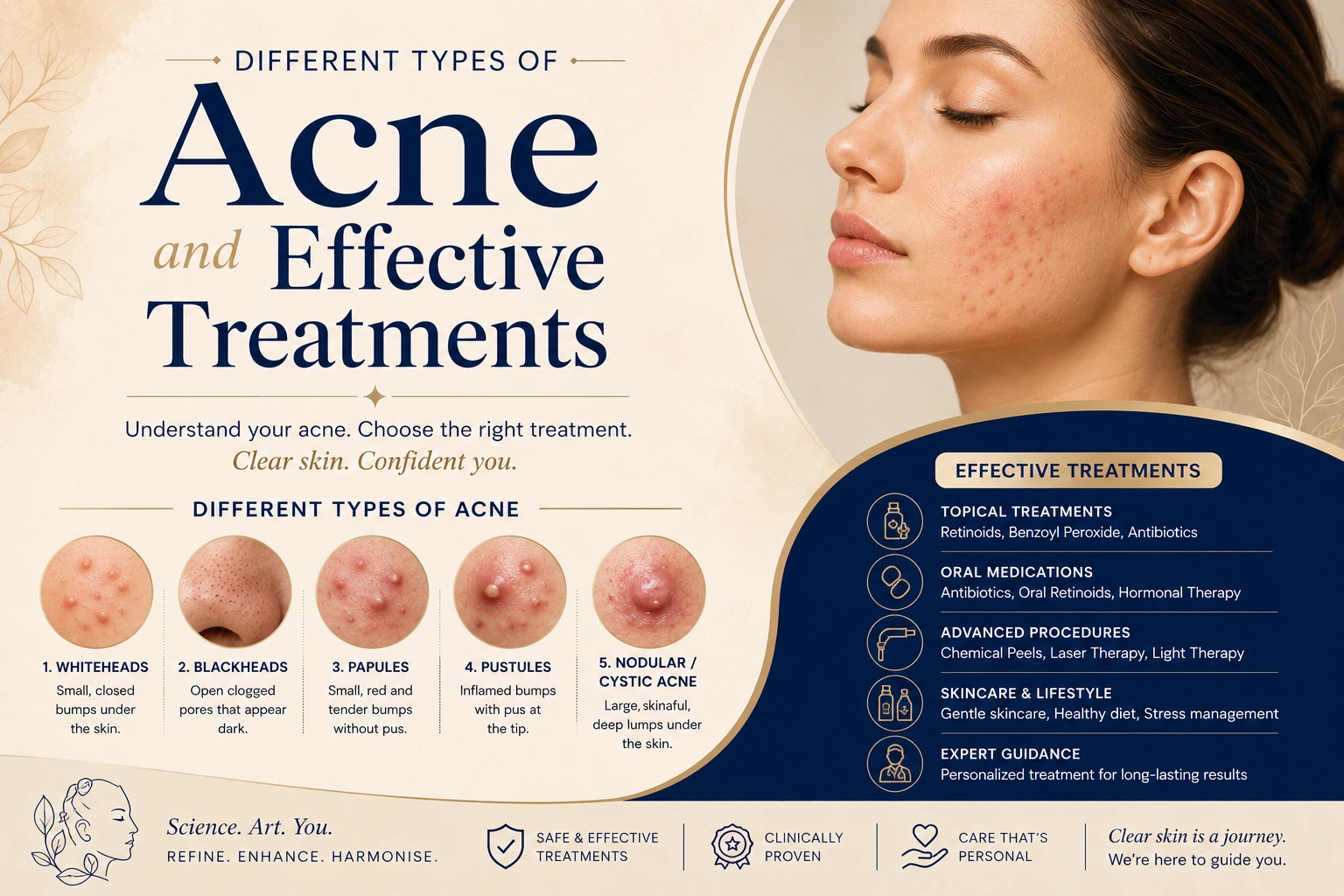
Different Types of Acne are the most common skin concerns, particularly among teenagers and young adults, though it can affect individuals of all ages. This condition arises when skin pores become clogged due to excess oil, bacteria, or dead skin cells, leading to blemishes and potential scarring.
In this guide, we’ll explore the main types of acne, their causes, and the most effective treatment strategies. Whether you’re experiencing mild breakouts or severe skin issues, this article provides valuable insights to help you manage your skin better and understand when to seek professional acne treatment.
Acne Types
- Comedonal Acne (Clogged Pores)
Comedonal acne is a non-inflammatory type of acne, meaning the skin doesn’t exhibit redness or swelling. It typically results from blocked pores caused by excess sebum (oil), an accumulation of bacteria, hormonal fluctuations, or improper shedding of dead skin cells.
Whiteheads (Closed Comedones)
These are small white or flesh-coloured bumps that form when a pore is completely blocked. They remain closed at the surface of the skin. Avoid popping whiteheads, as it can lead to inflammation and potential scarring.
Blackheads (Open Comedones)
Blackheads appear dark due to exposure to air, not because of dirt. These occur when a pore remains open but is still clogged. While they are sometimes manually extracted, it’s generally discouraged to prevent skin damage.
- Inflammatory Acne (Pimples)
This form of acne is what most people think of when they hear the word “pimples.” It is more severe than comedonal acne due to inflammation and is usually painful and red.
Papules
Papules are small, red bumps caused when clogged pores become inflamed due to bacterial activity. These lesions are tender and lack visible pus.
Pustules
Pustules are similar to papules but contain pus. They typically present as red bumps with a white or yellow centre. These commonly appear on the face, chest, and back.
Inflammatory acne can be triggered by hormonal imbalances, poor skincare practices, or stress.
- Nodulocystic Acne (Severe Acne)
Nodulocystic acne is a severe and often painful form of acne that penetrates deep into the skin. It is more likely to cause scarring if not treated appropriately.
Nodules
Nodules are large, solid, and painful lumps beneath the surface of the skin. Unlike cysts, they do not contain pus and feel firm to the touch. Nodules form when inflammation from smaller pimples spreads deeper into the skin.
Cysts
Cysts are softer than nodules and filled with pus. They tend to be red or purple and can be extremely painful. Because they’re located deep within the skin, cysts are more prone to rupture, spreading infection and increasing the risk of scarring.
Common Areas Affected by Acne
Acne typically appears on areas of the body with a higher concentration of oil glands, such as:
- Face
- Forehead
- Chest
- Shoulders
- Upper back
What Causes Different Types of Acne?
Acne is primarily caused by clogged hair follicles or pores. These blockages can occur for several reasons:
- Sebum Overproduction: This natural oil protects the skin but in excess can clog pores.
- Bacterial Growth: A common skin bacterium, Cutibacterium acnes, can multiply and exacerbate inflammation.
- Dead Skin Cell Build-Up: When these cells are not shed effectively, they can trap oil and bacteria in the pores.
When pores are blocked, this can lead to inflammation, pain, swelling, and visible blemishes.
Transform your look with neek liposuction
Can Acne Cause Scarring?
Yes. When acne lesions penetrate deeply into the skin, they can damage underlying tissues. This often occurs with nodulocystic acne. The body’s natural healing process can result in scar tissue formation, which may appear as depressions or raised areas on the skin.
Emotional effects, such as decreased self-esteem or anxiety, are also common. Fortunately, various treatments are available to minimise acne scarring and restore skin texture.
Effective Acne Treatment Options
The most effective acne treatments today go beyond short-term fixes and aim for long-lasting skin health. While conventional approaches such as topical agents like benzoyl peroxide, salicylic acid, and retinoids, or oral medications including antibiotics and hormonal treatments can provide temporary relief, they often fall short in preventing recurrence and managing underlying skin dysfunction. Similarly, professional procedures like chemical peels and laser therapy can enhance results but may not offer sustained control without a comprehensive skincare plan.
At Dr Kay Clinic, we recommend integrating medical-grade ZO® Skin Health products into acne treatment protocols. Made in the USA, this advanced skincare system is designed to restore skin function at a cellular level, targeting acne from its root causes such as oil imbalance, clogged pores, and inflammation. The ZO regimen not only helps clear active breakouts but also prevents future flare-ups, reduces post-inflammatory pigmentation, and promotes overall skin resilience. When combined with lifestyle modifications and in-clinic treatments, ZO Skin Health provides a powerful and long-lasting solution for both teenage and adult acne.
Conclusion: Managing Acne with Confidence
Understanding the type of acne you have is the first step towards effective treatment. Whether you’re dealing with minor blackheads or painful cysts, there are proven solutions available. Taking proactive steps—like using medical grade skincare products and seeking professional advice—can help clear your skin and prevent long-term scarring.
If you’re ready to take control of your skin, explore our acne treatment services and let us help you on your journey to clearer, healthier skin.