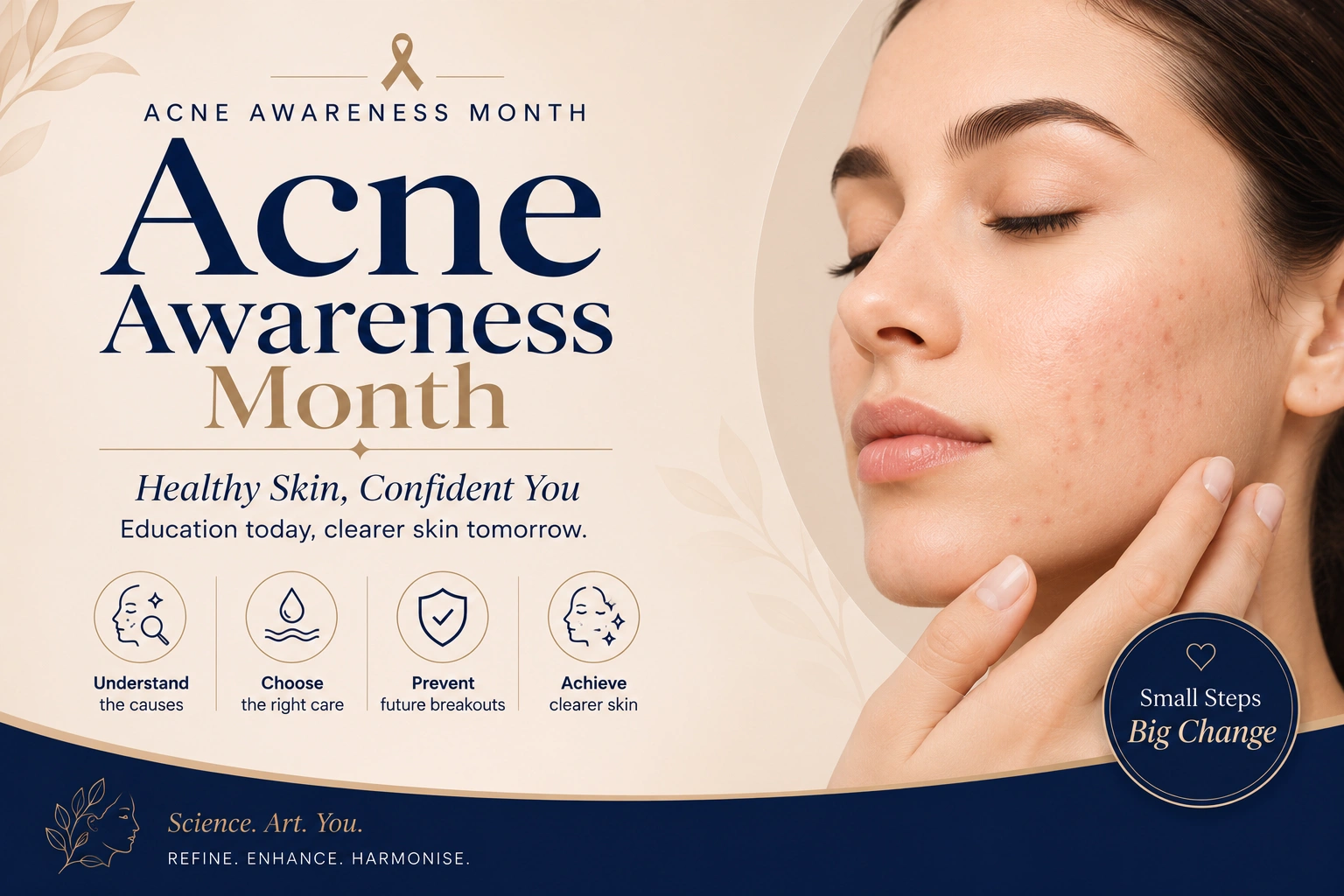
Acne is one of the most common skin conditions worldwide, affecting teenagers and adults alike. Yet despite how widespread it is, acne is often misunderstood and treated superficially. June is Acne Awareness Month, an opportunity to understand acne at a deeper level and explore modern, personalised treatments that work.
What Really Causes Acne?
Acne is a multifactorial condition with both external and internal triggers. Understanding its root causes is the first step to effective treatment:
- Hormonal Fluctuations
Especially common in adolescence, menstrual cycles, or in conditions like PCOS, elevated androgens stimulate oil (sebum) production fuelling breakouts.
- Clogged Pores
Sebum and dead skin cells can block pores, leading to whiteheads, blackheads, and inflammation.
- Bacteria and Inflammation
Cutibacterium acnes thrives in blocked pores, triggering redness, swelling, and pus formation.
- Vitamin Deficiencies
Low Vitamin D, B12, or zinc levels can compromise skin function and immunity. These imbalances are common but often overlooked in acne assessments.
- Stress, Diet, and Genetics
High-sugar diets and chronic stress impact hormonal balance and inflammation. Genetics can also influence how your skin reacts to these triggers.
The Importance of Medical Assessment in Acne Treatment
Effective acne treatment should go beyond topical products. A comprehensive medical approach may include:
- Detailed medical history
- Private blood tests for hormone levels and vitamin deficiencies
- Lifestyle and skincare evaluation
- Optional ultrasound assessment for adult acne or cystic acne cases
This ensures the treatment targets the underlying cause, not just the symptoms.
Advanced Acne Treatments in London | Professional & Personalised Skincare
Modern Acne Treatments That Work
There are now highly effective medical and regenerative options available for those who want long-term relief from acne and post-acne scarring:
🔹 1. Medical-Grade Skincare
Customised regimens using active ingredients like salicylic acid, niacinamide, or retinoids help unclog pores and rebalance the skin barrier.
🔹 2. PRP and Exosomes for Acne
PRP for acne involves using your own blood-derived platelets to reduce inflammation and stimulate healing.
More advanced protocols use PRP-derived exosomes, which deliver anti-inflammatory and regenerative signals to support clearer skin and tissue and scar repair.
These regenerative therapies are especially useful for:
- Hormonal acne
- Acne scarring treatment
- Skin that is resistant to traditional treatments
🔹 3. Medical Chemical Peels
Peels using salicylic, mandelic, or TCA acids offer deep exfoliation, reduce pigmentation, and improve skin texture.
A properly supervised medical chemical peel for acne can dramatically reduce active breakouts and scarring over time.
🔹 4. Vitamin and Wellness Support
Testing for and correcting vitamin deficiency and acne links, especially Vitamin D, B12, and zinc, can improve outcomes. This is often done as part of medical wellness programmes that integrate skincare with systemic health support.
Why Personalised Acne Care Matters
Every case of acne is different. A 16-year-old with puberty-related breakouts has a different cause and treatment path than a 32-year-old experiencing hormonal acne or post-pill flare-ups. That’s why a personalised, data-informed approach is essential.
Ready to Take Control of Your Skin?
If you’re dealing with stubborn acne or scarring, modern treatments like PRP, exosomes, and vitamin support may offer the solution you have been searching for.
We combine clinical assessment, regenerative therapies, and wellness-based care to uncover the root cause of your acne and treat it effectively.
Book a consultation today and start your journey to clearer, healthier skin guided by medical science and regenerative innovation.