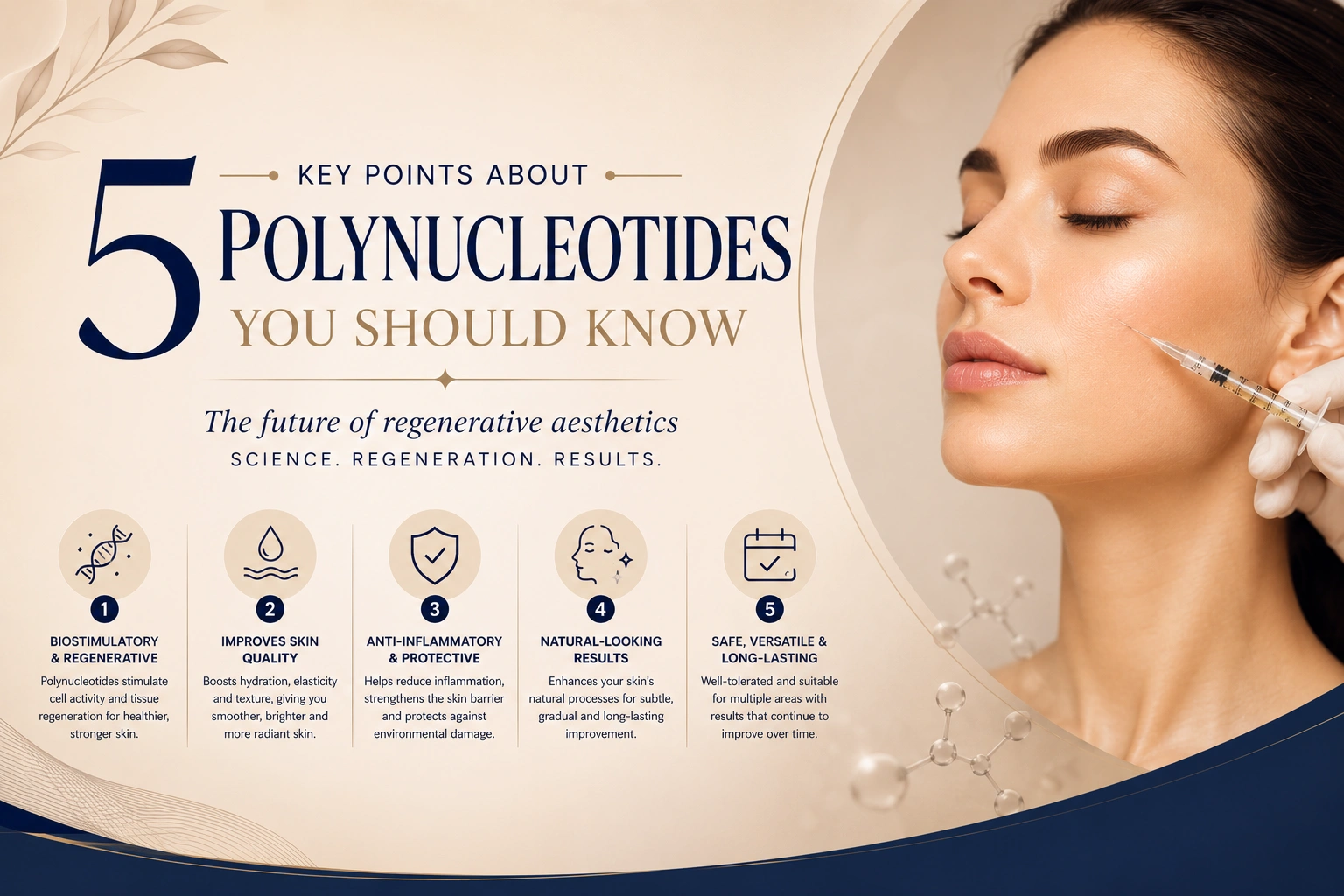
In our 5 Key Points About Polynucleotides, you’ll learn how these biostimulators go beyond basic hydration, offering much more than hyaluronic acid‑based skin boosters. Polynucleotides act as vital nutrients for skin cells, stimulating collagen and elastin production, enhancing the extracellular matrix and delivering powerful anti‑inflammatory benefits. By understanding these five key points, clients at our clinic can appreciate why polynucleotide treatments represent the next generation of advanced skin rejuvenation.
Unlike regular moisturisers, polynucleotides promote skin regeneration by encouraging the production of key proteins that restore skin elasticity and structure. This makes them ideal for those looking to rejuvenate their skin in a natural, non-invasive way.
What Are Polynucleotides?
Polynucleotides are chains of nucleotides, which are the fundamental building blocks of DNA and RNA. Extracted and purified from compatible DNAs (known for their excellent biocompatibility with human tissue), these molecules work at a deep cellular level to stimulate tissue regeneration, improve skin hydration, and enhance collagen production.
Unlike traditional dermal fillers, which simply “fill” spaces under the skin, polynucleotides promote the body’s natural ability to repair and rejuvenate itself. This results in long-term skin health, with visible improvements in texture, tone, and elasticity.
Polynucleotides not only enhance the skin’s structural integrity but also work to maintain its natural vitality, offering a more holistic approach to skincare. Whether you’re looking to improve skin appearance or restore youthful radiance, polynucleotides provide a highly effective, non-invasive solution.
How Polynucleotides Work
Polynucleotides stimulate fibroblasts, the skin cells that produce collagen and elastin, leading to significant improvements in skin health. This process results in increased skin density and firmness, reduced fine lines and wrinkles, and enhanced hydration for a plumper, more radiant complexion.
They also support faster recovery after procedures like microneedling or laser treatments, and help reduce inflammation and pigmentation, giving the skin a smoother, more even tone.
Polynucleotides not only enhance aesthetics but also restore skin health at a deeper level, offering a non-invasive solution for long-term rejuvenation and skin improvement.
How Long Does It Take to See Results from Polynucleotides?
Unlike many injectables, the results of polynucleotides are not immediate, and this is what sets them apart. Although they are administered similarly to dermal fillers, the way they work is quite different. After treatment, you may experience some swelling for 3-5 days as the body absorbs the polynucleotides.
The desired effects typically become visible within 90 days, as the skin undergoes gradual, cellular-level changes. The key advantage of this approach is that it eliminates concerns about lumps, excessive swelling, or overfilling that can sometimes occur with other injectables.
While the results do not provide an instant lift, they improve steadily over time. For many, the long-term benefits of smoother, firmer, and healthier skin are well worth the wait.
Patience is essential, but the natural, long-lasting results make polynucleotides a great investment for those seeking gradual, effective skin rejuvenation.
Are Polynucleotides the Same as Dermal Fillers?
No, polynucleotides are not the same as dermal fillers. While both are used in aesthetic treatments, they function very differently and offer distinct benefits.
Dermal fillers are typically made from a gel-like substance, often composed of hyaluronic acid. These fillers work by providing immediate volume and a physical plumping effect under the skin. They are injected into specific areas to restore lost volume, smooth wrinkles, and define facial contours. The results are noticeable right away and continue to improve over the next 3 to 4 weeks. Dermal fillers usually last between 6 to 12 months, depending on the type and area treated.
On the other hand, polynucleotides are a type of biostimulant that work at the cellular level to promote collagen and elastin production, improve skin texture, and enhance hydration. Unlike dermal fillers, which provide instant volume, polynucleotides stimulate the skin’s natural regenerative processes over time, leading to long-lasting improvements in skin health and appearance.
Key Differences Between Polynucleotides and Dermal Fillers:
- Mechanism of Action:
Dermal fillers provide immediate volume and a physical plumping effect, while polynucleotides stimulate the skin’s natural collagen production for long-term skin rejuvenation. - Duration of Results:
Fillers provide immediate results that improve over time and last 6-12 months, whereas polynucleotides offer gradual, long-term benefits with results becoming noticeable around 90 days after treatment. - Skin Health Benefits:
Polynucleotides not only enhance appearance but also improve skin texture, tone, and elasticity over time, while dermal fillers primarily focus on volume restoration and wrinkle reduction.
In conclusion, while both treatments offer aesthetic improvements, polynucleotides go beyond simple volume enhancement to foster long-term skin health and rejuvenation, making them an excellent complement to dermal fillers for a comprehensive approach to skin care.
Read about Polynucleotide Therapy
Why Choose Polynucleotides Treatment?
Polynucleotide treatments offer a wide range of benefits that go beyond just aesthetic enhancement. Here’s why you should consider this innovative treatment for your skin:
- Enhanced Collagen Production:
Polynucleotide treatment boosts collagen levels by up to 47% in just 23 days, significantly improving skin texture, firmness, and elasticity. Collagen is the key element responsible for plumping and maintaining skin structure, and we begin to lose it as early as our 20s. - Thicker Epidermis:
Experience up to a 52% improvement in skin thickness within the same timeframe. This leads to a stronger, more resilient epidermis, which helps improve overall skin health and protects against external environmental factors. - Improved Hydration:
Polynucleotides have the ability to attract water molecules, resulting in enhanced skin hydration. This makes the skin appear plumper and more radiant, combating the dry, tissue-paper appearance caused by dehydrated skin. - Reduced Inflammation:
One of the major benefits of polynucleotide treatment is its anti-inflammatory effects. It acts as a powerful anti-free radical agent, minimising inflammation and protecting the skin from UV damage. This makes it an ideal treatment for individuals with inflammatory skin conditions like rosacea, showing excellent results in our clinic. - Versatile Treatment Options:
Polynucleotide treatments are incredibly versatile and can address a range of skin concerns:- Overall Skin Health: Effectively targets signs of ageing and improves skin vitality.
- Pre/Post Procedural Care: Supports recovery for both medical and aesthetic treatments.
- Skin Conditions: Helps with acne, atrophic scarring, rosacea, elastosis, and hyperpigmentation.
- Hair Loss: Aids in treating alopecia and hair thinning.
- Stretch Marks & Deep Lines: Reduces the appearance of stretch marks and deep wrinkles.
- Rehydration: Revives dull, tired skin, regardless of age.
Conclusion
Polynucleotides provide a holistic approach to skin rejuvenation, promoting healthier, more youthful-looking skin. Whether you’re looking to combat the effects of ageing, treat specific skin conditions, or improve overall skin health, this treatment offers a safe, effective, and versatile solution.